Microsteps to Syncopa: as easy as uno, dos, tres, cuatro…
Microsteps to Syncopa: as easy as uno, dos, tres, cuatro…




Microsteps to Syncopa: as easy as uno, dos, tres, cuatro…
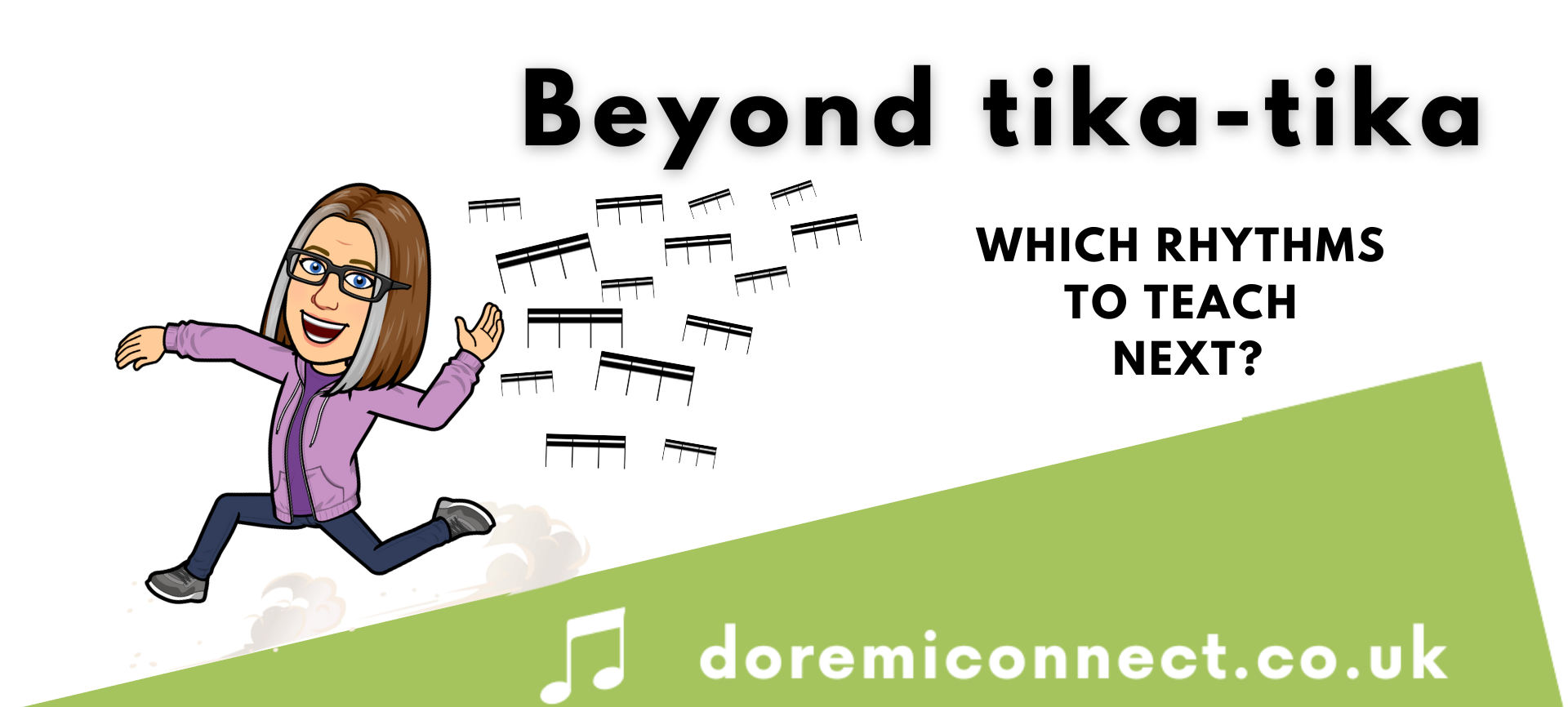
I decided to write my next blog about which complex rhythms you could introduce after tika-tika. Of course, alongside preparing and presenting the next rhythm, our students need to practice tika-tika.
In this blog I’ll tell you how I use this song and others to introduce more complex rhythms and why I think Down the Road, in the way I teach it, is such a great song for presenting one particular complex rhythm…
I think Hi Lo Chikalo is great for presenting low so and low la. Below, I’ll show you how I do it and some ideas for practising low so and la with other songs.
We’ll explore Hi Lo Chikalo, a fun clapping game that is great for rhythm dictation and discovering something new about solfa!
I just love taking really simple songs that we can use multiple times throughout the journey of students musical education and give them different learning opportunities from simple to complex and thus proving that the Kodály approach is not just for babies, it is can also really can provide very challenging activities for older children, teenagers and even adults!
Alongside the work on introducing do re mi on the white keys, we can introduce the musical alphabet which takes us down a path of learning landmark notes, tonics, clefs, the grand staff and our destination… middle C
Your students have been singing in solfa beautifully and know their steps and skips on the keys and the stave… now it’s time to learn about letter names and clefs! What do you do?!
This blog will explore what it means to prepare our students aurally, physically and visually with practical suggestions for activities